
Yes, the cold is bad for your joints
It's not your imagination!
Well, it's been a cold one this week, hasn't it?! And if you've been feeling a little bit more stiff and achy than usual, I think we might know the culprit.
Yes, obvs, many of us (me included) might have been a little less active over the Christmas period. And that can definitely make your joints move less smoothly.
But, there's a real biological reason why you feel a bit more clunky when the temperature and/or barometric pressure drops.
Your joints are like an aeroplane
Say what now?
All your joints are enclosed in a capsule that's filled with synovial fluid. This is the "oil" in your joints, that: lubricates the cartilage to reduce friction and allow smooth movement; supplies nutrients & removes waste; and provides shock absorption.
Check out the picture below 👇🏽👇🏽
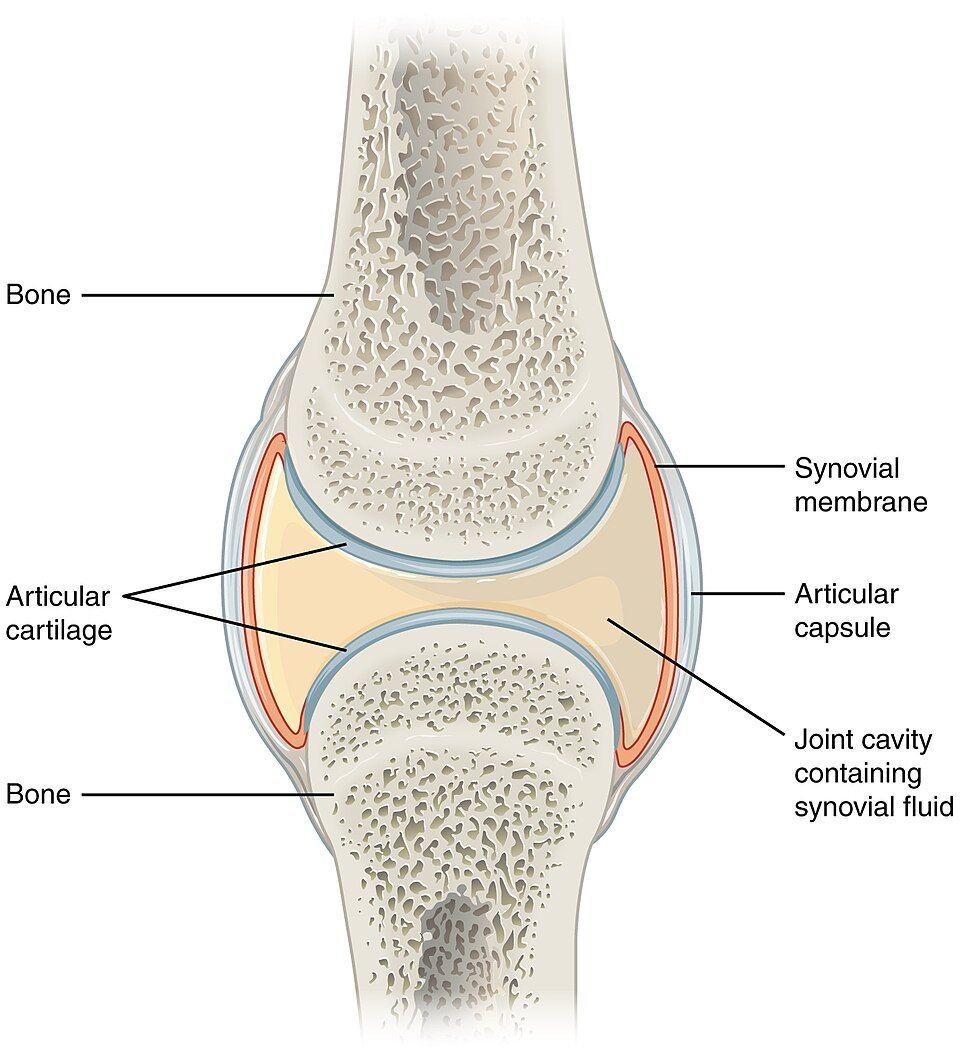
Now, this capsule is pressurised. So, when the barometric pressure in the atmosphere drops, the pressure outside your body is now lower than the pressure inside your joint capsule, so the tissues inside expand slightly to equalize.
If your joints are healthy, you mightn't notice it. But if you've got existing inflammation, your nerves are already sensitized. So, when the slight expansion presses against your sensitive nerves, the result is ouchies.
Your synovial fluid's like engine oil
As I mentioned above, one of your synovial fluid's jobs is to lubricate the cartilage so your bones glide rather than grind.
In warm weather, this fluid is thin and viscous.
I think of it like the jar of runny honey you have in your cupboard. In the summer, it's nice and gloopy and dribbles deliciously off your spoon.
But come winter, it thickens and becomes much less runny. So, you get expanded tissues pressing on nerves, combined with thick, sticky lubrication. No wonder you feel like you're a cardboard cutout of yourself!
How can you make it work better?
You can't control the weather. But you can control the internal environment. So, here's how to make it feel better:
1. Give your joints an oil change with some Omega-3s
If your joints feel clunky, you need better lubrication. Omega-3 fatty acids (specifically EPA and DHA found in fish oil) are the raw materials your body uses to create the biochemical agents that actively turn off inflammation.
The Fix: Eat more fatty fish (salmon, sardines) or high-quality fish oil during the winter months. You're literally greasing the gears.
2. Don’t stretch cold rubber bands
When many people feel stiff, they try to do static stretches which actually isn't great. Your tendons and ligaments are like rubber bands, and if you stretch a frozen rubber band, it snaps. Bit if you stretch a warm one, it's elastic.
The Fix: Don't stretch to warm up. Move to warm up. Do 5 minutes of low-impact movement (walking, air squats) to raise your core temperature before you try to touch your toes. Heat the fluid first.
3. Hydrate the sponge
Your cartilage is mostly water. It acts like a sponge between your bones. If you're dehydrated (which happens more often in winter because we feel less thirsty), the sponge dries out and loses its shock-absorbing power.
The Fix: Drink water even if you're cold. Your cartilage needs the hydraulic pressure.
Give all these a go and let me know how your joints feel!